Monday, January 30, 2023

Random reflections, answering unanswered comments because I can't sleep

I visited this blog for the first time in a while--not having posted or responded to any comments since 2014. There were several times I thought I should respond to some of the comments trickling in, but prevented by:

1) Lack of initiative/energy during med school/residency

2) Fervent desire to keep this cringe-worthy clusterfuck of a blog hidden deep within my subconscious.

I couldn't sleep--while browsing Reddit I saw some premed-related content, and found myself reading through this blog. Embarrassingly, I lol'ed at my own posts and memes.

I suspect hardly anyone reads or follows this blog since the majority of the traffic originated from Premed101--also another place I've almost never gone back to.

Regardless--this is for my own amusement, sanity check, and update for anyone who may be remotely interested (i.e. long term outcomes of an average premed student).

Where Am I Now

Since my last post in 2014 (nearly a decade ago, wow)--finished med school in 2018, and started 5-year residency. Currently in my last year and studying for exams--hence the disrupted sleep cycle. Life has changed, rather substantially since then.

Responding to unanswered comments

For shits and giggles. For the purposes of reflecting. In case it is helpful to someone.


"hey, the people want part 3!"--person, Apr 2, 2016

Don't got time anymore. Plus, my MMI answers were/are probably shit so you don't want any of that.


"What could you have possibly said to make the situation upside down!?"--Hanna, Mar 29, 2016

Who fucking knows. Fairly sure I froze and uttered whatever that came to mind which was probably incoherent and/or possibly morally bankrupt--at a midpoint of the interview, then progressively got worse from there. It may have been a scenario-type of question.


"Just wanted to say your blog is awesome! I am wondering if you did anything different in terms of preparation for your last round of interviews? I have been struggling with interviews that really seem to hinder me from being accepted...btw hope you put up more postings under the Korean category as I am a Korean premed myself :)"--weenieholic, Jan 19, 2016

For the first round of interviews, I prepped a "reasonable" amount I think, can't recall.

For the second round, I prepped way too much.

For the third round, fortunately, I ran out of fucks to give and did not prep (1-2 hours at most probs). With each interview, I progressively gave less fucks--by the time of the last interview (the one that accepted me), there were 0 fucks given.

The trick, I guess, is to give minimal fucks with very little prep ¯\_(ツ)_/¯


"Hey Mat! Why was applying to US a bad idea?"--person, Oct 16, 2015

"Hey Matt! Great blog! I was really curious about your experience applying to those 14 US Medical Schools. I always thought of it as a backup to Canadian Medical Schools but you make it seem like it's 10000X more difficult to even get an interview. Do you think you could make a new post about which schools you applied to or shed some light on why those 14 applications went so poorly? Thanks!"--person, Sep 27, 2014

Rushed, costly, last minute decision with little prep/research that ended up being a giant money sink than anything else.


"Hey Matt, Haven't check in on this blog for a while, but I wanna say congratulations! I am also a first year MD student in Ontario, and I gotta say your blog posts helped me so much on my MCAT and gave me the confidence to take the exam. I really related to some of the struggles you had and loved the humorous spin you put on them with your memes and comics. Wish you all the best and hopefully we will run into each other around the wards some day. Cheers."--person, Jun 21, 2015

The wards were cool.


"I don't know you at all lol I'm just a grade 12 students but I'm very happy for you! You went through all these rejections and I know many people would give up and quit but you didn't and I like to say that your experiences have inspired me! Thank you!"

"Your rage comics are hilarious! And your "life cycle" into medial school was very similar to mine, right down to getting off the wait list (third round for me). I hope you keep up the blog in medical school, and good luck!"

"Hey, I got rejected from UofT last year (first time applying) and am currently applying to US schools and UofT. I felt pretty bummed out about getting rejected last year, but after reading your post I feel much better. It's amazing how you were able to psychologically win yourself over and continue applying. Thanks for the post and giving me the motivation to continue on."

Comments like these give me courage to live on.


Finally, the single non-positive comment in this blog:


"As a current medical student, I have one advice for you: please stop this blinded pursuit of med schools. There are so many better things in life. You're just wasting time and money. Honestly, try other pursuits. Maybe nursing? Maybe PhD/Master's? Medicine is not worth all the trouble you're going through, and, most importantly, the fact you're wasting your best years in life just wandering around is painful. Best of luck this cycle, but time to face the music, Matt."--?angry med student, Apr 27, 2014.

Holy shit--am I glad I never "face(d) the music", as the world around me burns with a slow descent into a recession of some kind.


Until the next time I find myself not sleeping.

Matt

Tuesday, July 1, 2014

The Life Cycle of an "Average" Premed: a ragecomic chronicle

I've finally settled down enough to reflect on the last 4 years of applications... and thought it would be a good idea to share my application history for those of you who may be in similar positions.

As requested (many times), my year-by-year undergraduate GPA (OMSAS) :

Year 1: 3.64
Year 2: 3.75
Year 3: 3.86
Year 4: 3.86

cGPA: 3.78
wGPA (weighted for U of T): 3.88

Not the most impressive stats, as you can clearly see.

I first started applying during third year of undergrad, more for practice than expecting actual interviews given my stats at the time. I've applied every year since then, at one point applying to the US (which was a complete and utter fail- for good reason). Here's a year-to-year breakdown along with graphical illustrations of my reaction to rejections each year:

Cycle 1- 2010-2011

Applied: Queen's, Toronto, McMaster
Rejected: Queen's, Toronto, McMaster


Figure 1. Pre-intervew rejections.
Summary: Rejected pre-interview for the three schools I applied to. I was periodically checking the library computers during lab break times. My lab partner at the time didn't apply, but was accepted in our 4th year- to the same school I'll be attending, actually.

This was the year Queen's first started taking ECs into pre-interview scoring, hence the lack of an interview...

Cycle 2- 2011-2012

Applied: Queen's, Toronto, McMaster, Western, Ottawa, Manitoba, Calgary
Interview: Manitoba, Western
Rejected: Manitoba, Western

Interviews at Western & Manitoba- see How to really, really screw up important interviews: a ragecomic presentation.

Summary: As a (slightly) socially awkward & nervous interviewer, interviews did not go down well (see above link). This was during my 4th year, while I did not have any back-up plans planned. This was/is a terrible idea, I still can't stress this enough. See How I got my first research position: a ragecomic illustration for what is usually highly unlikely to happen for people without solid backup plans.

Cycle 3- 2012-2013

Applied: Queen's, Toronto, McMaster, Western, Ottawa, Manitoba, 14 US schools
Interview: McMaster (off waitlist), Western
Rejected: McMaster, Western, all US schools


Figure 2. Overly-exaggerated graphical illustration of post-rejection celebrations.
Summary: Sad times here. I prepared extensively for both interviews, practicing with friends, labmates, etc. I think the problem was (like many others) I was over-prepared, and sounded as if I was reading off a script... and consequently didn't seem like a real person. Interestingly, now that I look back- I actually thought I did well in the interview (see Interviews & raging times at the lab)... idiocy, idiocy everywhere.

To be honest, this was probably among the most (but not the most) depressing, disappointing moments in my life. Especially considering the amount of help I was given by some awesome people around me... also didn't help that I was receiving pre-interview rejections year-round (starting from September? Or something like that) from the US schools I applied to. More on that later, but mostly due to bad reference letter(s), terribly written essay & secondaries, and lack of quantifiable research during applications.

Cycle 4- 2013-2014

Applied: Queen's, Toronto, McMasterWestern, McGill
Interview: Queen's, Toronto, Western (MD/PhD)
Rejected: All MD/PhD programs, and 1 MD
Waitlist: 1 MD
Accepted: 1 MD (after initial waitlist)

Summary: This was the first year I could apply with actual research experience/accomplishments in hand, since I had only started my job around the time applications were due in the previous cycle (2012-2013). After 1-1.5 years of solid research slavery (see Enslaved by brains: a ragecomic representation), I had a reasonably decent CV for MD/PhD programs- and was lucky enough to get interviews.

The interview at the school I was accepted to was the last interview I did, whilst knowing I was rejected from all the MD/PhD programs and also highly likely rejected from the MD programs as well since the interviews occurred on the same days/weekends (and interview performance likely correlated among each other). I went into the interview saying to myself that this is the last med school interview I will ever do, and ended up as the most "real" interview I ever did- I was not nervous at all, and able to be "myself" during the entire interview. I left feeling confident, and continuously so until a week before May 13th.

--------------------------------------------------------------------------------------------

After 36 (that's a nice number) pre- and post-interview rejections, and 7 interviews over 4 application cycles, I finally have an acceptance in my hand. Even as I'm filling out paperwork, applying for my LOC, and doing all the med-like things I've always wanted to do (paperwork ftw), and as cliché as this sounds, I still can't believe I'm in. Imposter syndrome, even before starting med school...

...and I find myself wondering what I'm going to write about now in this blog of mine. Perhaps something about research? How to epic-fail at US med applications? Not really sure.

Matt

Tuesday, June 3, 2014

No longer a premed

Surprise.
It's finally official- I will no longer be a "premed". This is what happened in the last year:

Interviewed: U of T, Queen's, Western

Waitlisted: one of the above
Rejected: one of the above
Accepted: one of the above (after initial waitlist)


I will post something more coherent when I've settled down a bit.

Matt

Monday, April 21, 2014

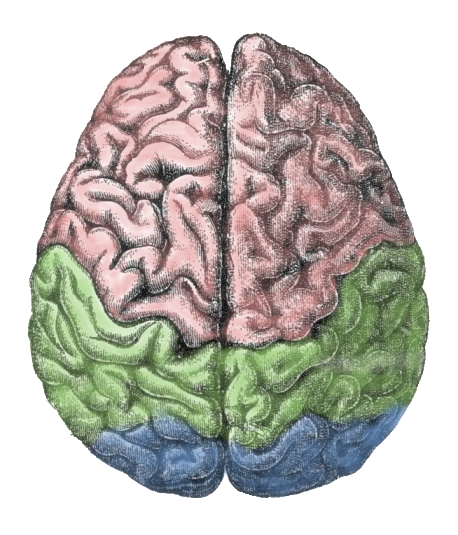
Enslaved by brains: a ragecomic representation

http://upload.wikimedia.org/wikipedia/commons/8/85/Cerebral_lobes.png
I previously mentioned that I started work in a research lab after graduation. People have asked me, both on the blog and email, what I actually do at work... truthfully, I wasn't completely sure of what I was doing until recently. Simply put (without being specific and compromising anonymity due to some recently published work)- I look at brains. I look at a lot of brains. Different kinds of brains. My work consists of:

1. Look at brains.
2. Make cool & pretty pictures.
3. Draw dots and lines.
4. Look at more brains.
5. Repeat 1-4

To illustrate, here is what a work day looks like for me (for those who's familiar with this line of work, of course I don't work with all imaging modalities- just a few from below):

Figure 1. Enslaved by brains.

I look at brains at work, commute home, then look at more brains... up to a maximum of 13 hours a day. Craploads of brains. Clearly, I like brains. This has been going on for ~1.5 years now.

Something important to note is that I initially started this job mostly as a back-up plan... but as time passed, I started to really enjoy working in research. So much that I applied for PhD programs, not as a back-up (especially considering I'm terrible at interviews by consensus, and truly not hopeful for anything in May) but as an alternative path for me to choose. Throughout undergrad, I barely considered research at all since it didn't seem interesting- so I ruled it out altogether.... but I happened to find the perfect supervisor & lab & field, all at the same time and things fell in place. At this time, I can say that I'm a little more passionate about research than medicine, and will be continuing research regardless of what happens in the near future. Funny how things change.

Lessons learned: 
-Science is hard, but cool. Brains even more so.
-Don't rule out possible opportunities and paths in life. Med school really isn't everything.
-From my biased, entirely personal point of view (entirely due to the fact that I've been having a hard time with interviews): if you're bad at med school interviews, you might enjoy research more than medicine. More on that later.

Matt

Thursday, January 2, 2014

Big List of All Med School Interview Questions- Part 2: Multiple Mini Interview (MMI)

Figure 1. A hauntingly accurate, single-meme portrayal of the MMI.
As promised- here is the compilation of MMI interview questions... and arguably the largest collection of MMI questions in a single document.

Link: Big List of All Med School Interview Questions- Part 2: Multiple Mini Interview (MMI)

Why this collection is useful:
  1. As with the panel/traditional format, interviews can only cover so many topics of discussion and from a limited number of questions. Although this might be less applicable for the MMI, one could argue that there exist some limitations in how the questions are structured.
  2. Medical schools tend to organize their interview questions based on certain categories- although the categories here are slightly different from the panel/traditional format.
  3. The sheer number of questions & comprehensiveness of areas covered allows for a thorough understanding of the interview process, while at the same time acting as a large reservoir of practice questions for applicants.
This collection is currently organized into the following categories:
  • Section 1. Ethical decision making
    • Barely addressed in Part 1 (Panel/Traditional).
  • Section 2. Critical thinking
  • Section 3. Problem solving & conflict management
  • Section 4. Communication skills (acting)
  • Section 5. Current healthcare & societal issues
  • Section 6. Standard interview questions (redundant)
    • Small section, possibly redundant- however MMIs tend to ask different types of standard questions than the panel/traditional format.

Things to note:
  • Please note that this is only the first release, before the majority of the interviews start in Canada.
  • This is considerably less expansive than Part 1- due to many reasons:
    • A lot of material I had to withhold until further notice (many issues dealing with compromised confidentiality agreements, possible copyrights, etc).
    • I've been more swamped than ever at work.
  • Despite having said that, this compilation will get updated from time to time with the addition of more questions and such.
Release info:
Version 1.0 (January 2nd, 2014): Initial release

Acknowledgements: this collection was based on more than a dozen sources, anywhere from premed101, SDN, multiple schools' admissions websites etc.

Terms of Use:

In accessing the documents and its content ("Materials") on this site, you agree to the following terms and conditions:
  1. Permission is granted to electronically copy or print portions of the Materials for your own personal, non-commercial use. Any other use of materials on this site without our prior written consent is strictly prohibited.
  2. You must not modify paper or digital copies of the Materials you have printed off or downloaded in any way.
  3. You must not use any part of the Materials for commercial purposes.
  4. In no event, unless required by law or agreed to in writing, will "The Average Korean Premed" (krnpremed.blogspot.com) be liable to you for damages, including any general, special, incidental or consequential damages arising out of the use or inability to use the Materials.
--------------------------------------------------------------------------------------------

Please feel free to share your opinions/concerns/comments/criticism/etc.

Part 3 will be a collection of solutions/answers to some of these MMI questions (not provided by me, of course). This will take some a lot of time.

Happy New Year.

Matt

Sunday, October 20, 2013

Life and other things with random musings

Without even realizing it, this blog has passed 100,000 views. Which is pretty cool.
Fig 1. Wow I'm so happy to have reached 100k views for this blog.
This is an unexpected surprise. In case you haven't noticed, I've added a small poll on the right side to see how many people actually visit this blog regularly. If you do visit this blog regularly, thank you for your support(?) and please do vote in the poll.

Incidentally, here's a graph showing blog viewership since I started in 2011:


Fig 2. Number of hits, 2011-current.
Random rant 1:

To be completely honest, I've lost my way in terms of what to do with this blog. To be even more honest, it's probably because I've been having doubts about medicine. Yeah that's right, I said it. I'm sure many applicants (especially those not accepted after many cycles), and even those who are already in med school, in residency, or practicing, have had doubts at some point... and I'm sure there are a lot of others in similar situations as mine.

Random rant 2:

I think I speak for a lot of people with this rant... I applied again this cycle. It feels like everyone around me (sometimes literally) is getting accepted and moving on, while I'm stuck in the same loop. I'm just tired at this point and on the verge of giving up and doing something else. On average, premeds apply 2.9 times before getting accepted... which kind of sucks.

Random rant 3:

I've ran out of things to rant about... but I've developed a sort of addiction for research. Here is an artist's depiction of what research looks like (stealthily borrowed from the MNI):
Fig 3. What research really looks like.
Nevertheless, I (by I, I mean we) will keep trying/applying, although I may fall off the bandwagon at some point.

So that brings us to this: what am I going to do? I've (temporarily) ran out of steam for admissions, medicine, med school, and all things related including this blog... you may have noticed that the last time I posted was in June. However, I still plan on finishing off/continuing a few things for the blog:

  • Big List of All Med School Interview Questions- Part 2: MMI/ethical
    • I will get this out in the near(?) future... it'll be nowhere as organized as Part 1, but nevertheless still useful.
  • Big List of "Back-Up" Plans
    • I hope to continue this, albeit at a much slower pace.
  • Comics & memes
    • It's like I've turned off whatever controls my sense of humour in my brain.
  • Answering comments & emails
    • I've always replied to comments & especially emails (I'm more accessible by email- those of you who've emailed me would know... my apologies if I've forgotten to reply at any point though). Feel free to email me your sympathies.

Other than that, things will continue to move along. Good luck to all the applicants applying this year.

Matt


Sunday, June 2, 2013

How to destroy the MCAT with minimal study time (Part 5- Reviewing Strategies & Answers to comments)


Update (7/18/2014): Commenting has been disabled- it's been more than 4 years since I wrote the MCAT & I don't think I should continue giving out random advice & the new MCAT will render a good chunk of my MCAT-related writing obsolete. Good luck to everyone, regardless.

Hi folks,

I've been way too busy with work to answer recent comments/emails regarding the MCAT- but here are answers to some frequently asked questions:

Q: What material should I be using for BS/PS/VR/etc?

A: In my previous posts, I've cited Kaplan as the best for science sections (due to sheer difficulty) and EK for VR. However, there are alternatives that will serve just as fine- here's a list of material that you can really choose from and still do well on the MCAT:

BS, PS- Kaplan, Berkeley review, Princeton Hyperlearning (and regular Princeton), EK 1001
VR- Examkrackers (101 passages & strategy book), Princeton Hyperlearning, Berkeley review

The above are consistently cited for their effectiveness- really, any one (or multiple) should be fine. Don't be too concerned by which prep material you use- it's more about how you study & review. More on that below.

Q: Where do I get all this material?

A: I think the Kaplan practice tests I used were old, outdated ones made into pdfs... but like I said, you don't have to use Kaplan- you can use any set of practice questions and still do well.

Q: How do I improve at verbal?

A: In my opinion, no one can really tell you how to do well on verbal. There is, of course, a lot of bs flying around (especially on premed101) regarding verbal tutoring and such- but this is ridiculous, each person's critical thinking process/language capabilities/prior experiences/etc are different and what works for one person may not work for another. This is really a self-teaching process. See below for my general reviewing strategies.


Q: What was your actual schedule like?

A: I don't think knowing what my actual schedule was like would help anyone. Your schedule should depend on your own timeline (i.e. days left until MCAT), your studying habits, as well as your strengths and weaknesses. There's always a big caveat when following any advice online (yes, even on premed101)- what worked for others may not necessarily apply/work for you. In my posts, I try to emphasize specific strategies (that I and others found very helpful) that you can generalize and use them for yourself- for example, my strategy for coupling cumulative reviewing & tons of practice questions.

In any case- this is roughly how my 18 days of studying went, I have trouble remembering now:

Days 1-10: Material review (PS, BS) for 5-6 days, sectional practice questions for the rest (8-10 hours per day).
Day 11: Kaplan practice MCAT- PS 7/BS 10/VR 7. PS practice tests (~12?) for the rest of the day (10 hrs).
Day 12: Kaplan practice MCAT- PS 13/BS 9/VR 10. PS practice tests (3-4?), started on VR and BS as well (total 9-10 hours).
Day 13: Kaplan practice MCAT- PS 8/BS 6/VR 9. BS practice tests (10+ until it started to feel like bleeding in my brain) (10+ hours).
Day 14: Online (free) practice MCAT- PS 9/BS 7/VR 9. BS & PS practice tests until rest of the day.
Day 15: Practice MCAT (Kaplan full-length), VR for rest of the day.
Day 16: AAMC MCAT #10 (I completely forgot these scores- probably around PS 12/BS 13/VR 10) & 2 VR (Examkrackers) tests.
Day 17: AAMC MCAT #8 (PS 11/BS 14/VR 10) & 3 VR tests.
Day 18: 4 VR tests (not a good idea).

...and of course, I always spend a lot of time reviewing (see below). The practice tests above refer to some convoluted mix of 10 full-length tests, 8 sectional tests for BS, PS, VR (all Kaplan on paper), and 12 EK verbal tests. Practice MCATs are full-length tests that I did online- 3 Kaplan, and a couple of other random free sites I found.

The bottom line is:
  1. Lots of practice tests, as many as you can possibly handle.
  2. Thorough, continuous, cumulative review of all practice tests and the material as needed (see below).
  3. Focusing on your weaknesses one at a time and deriving realistic strategies to overcome them.

The Average Korean premed's Review strategy for the MCAT- Cumulative reviewing of concepts & practice tests

This is a strategy that I found most effective- for both science sections and improving at verbal. I always say that you can only improve by thorough practice & review, and I think this strategy is the best way to go about improving at any section. 

For Verbal- EK's strategy is almost always cited as the best strategy for verbal. However, you do need to tweak these strategies to fit your own style. I would first start off by:

1. Learn & follow EK strategy thoroughly. Don't cheat/skip steps/cut corners- every bit helps imo. The EK verbal strategy book (Verbal Reasoning and Mathematical Techniques book) has some great practice questions for learning the strategy.

2. After each practice test, review every single answer- even the ones you got right. Try to understand where you went right/wrong (you might have gotten lucky) in your reasoning by referring to the answers. This is a painful process, but crucial.

3. If you've done things right, you should be able to see where/how you can improve. Tweak the strategy/your thinking process to make it work best for you. At some point, you may need to stop changing your strategy and just stick with what you have (the best one hopefully).

4. Repeat 2-3. Space your tests apart to maximize efficiency. For example: 

Day 1: verbal practice test (strictly timed, always) & review
Day 2: review Day 1 verbal test
Day 3: another verbal practice test & review
Day 4: review Day 1, 3
Day 5: practice test & review
Day 6: review Day 1, 3, 5

You can space them apart more (depending on your schedule)- but definitely something like once every 2-4 days. I've used this sort of cumulative reviewing for the science sections as well- which really helped. For science sections, I would do something similar:

Day 1: BS + PS practice tests
Day 2: BS + PS practice tests & review Day 1
Day 3: BS + PS practice tests & review Day 1, 2
Day 4: BS + PS practice tests & review Day 1, 2, 3

...where the amount of reviewing I need to do increases every day. Similarly to verbal, I reviewed everything- even the questions I got right. 

This is, in my opinion, the best way to improve at any section- maximizing practice & retention of concepts, and effective for use with large amounts of practice tests (see How to destroy the MCAT with minimal study time (Part 4- Putting it All Together).

Matt

Friday, April 5, 2013

Big List of All Med School Interview Questions- Part 1: Panel/Traditional Interview

http://business-english.pl/?p=344
Hello all- here is the ultimate compilation of traditional/panel interview questions, which is arguably the largest collection of medical school interview questions in a single document.

Link: Big List of All Med School Interview Questions- Part 1: Panel/Traditional Interview

Why this collection is useful:
  1. Panel/traditional interviews can only cover so many topics of discussion and from a limited number of standard questions.
  2. Medical schools tend to organize their interview questions based on certain categories- which I've tried to emulate in this guide.
  3. The sheer number of questions & comprehensiveness of areas covered allows for a thorough understanding of the interview process, while at the same time acting as a large reservoir of practice questions for applicants.
That being said, the collection is currently organized into the following categories:
  • 1. Personal Questions
    • 1.1 Personal History
    • 1.2 Personal Details
    • 1.3 Relationships/Interactions with others
    • 1.4 Personality & Character
    • 1.5 Behavioral/Situational
    • 1.6 Personal Experiences: collaboration/teamwork/leadership
    • 1.7 Personal Experiences: character
    • 1.8 Goals & Plans
  • 2. Application Related
    • 2.1 Knowledge of Program/Specific motivations
    • 2.2 Motivation/Commitment for Medicine
  • 3. Experiences: education/medicine/healthcare
    • 3.1 Academics
    • 3.2 Healthcare, Volunteer, Extracurricular Experiences
    • 3.3 Knowledge of field/realistic view of profession
    • 3.4 Knowledge of Healthcare System/Issues (Canada)
  • 4. Ethical questions
  • 5. Other
    • 5.1 Current events/World/History
    • 5.2 Weird/out-of-the-blue/creative questions
  • 31 Questions I Wish I Had Asked: from Organization of Student Representatives Association of American Medical Colleges, January 1992
Things to note:
  • There are sometimes comments or "sample answers" at the end of questions- these are sample response and/or advice from people with more insight and knowledge than myself (successful applicants, current medical students, admission committee members).
  • Please note that this is only the first release of the guide. The questions have been through a "brief" first pass (which still took  long). There will still need to be some changes, including (but not limited to):
    • There are sometimes questions that are only relevant to US medical school applicants (this guide was originally meant to assist with both Canada and US interviews).
    • Redundancies, badly worded/bad/unnecessary questions which need to be filtered out in a more thorough review.
    • Better/more efficient categorization of questions.
  • The "Ethical questions" section is not as expansive since I will be releasing an additional collection of MMI questions which will have a large number of ethical scenarios/questions.
Release info:
Version 1.0 (April 5th, 2013): Initial release

Acknowledgements: this collection was based on more than a dozen sources, anywhere from premed101, SDN, various medical school admissions websites, etc. My goal was to at least attempt to put together a much more complete and organized collection of interview questions based on every available source.

...and just in case:


Terms of Use:

In accessing the documents and its content ("Materials") on this site, you agree to the following terms and conditions:
  1. Permission is granted to electronically copy or print portions of the Materials for your own personal, non-commercial use. Any other use of materials on this site without our prior written consent is strictly prohibited.
  2. You must not modify paper or digital copies of the Materials you have printed off or downloaded in any way.
  3. You must not use any part of the Materials for commercial purposes.
  4. In no event, unless required by law or agreed to in writing, will "The Average Korean Premed" (krnpremed.blogspot.com) be liable to you for damages, including any general, special, incidental or consequential damages arising out of the use or inability to use the Materials.
--------------------------------------------------------------------------------------------
Again, please feel free to share your opinions/concerns/comments/criticism/etc. I always welcome feedback (which I really don't get a lot of). 

Part 2 will be a collection of MMI questions, and an accompanying guide for answering interview questions (both panel and MMI)... which may take a lot longer to put together.

Matt

Saturday, March 23, 2013

Interviews & raging times at the lab

I've been having trouble finding time to work on anything for the blog- been completely overrun by research & interview prep.

If you've read my last post regarding my past interview at a med school, you would have seen this:


I recently interviewed at the same med school recently, with (almost) the exact same panel:


...which leads me to believe that all interview panels for that school are composed of three characters: 1 friendly, 1 stoic, 1 skeptical, who've been instructed to appear that way. In any case (after having learned my lesson last year), I was a lot more prepared and the interview went much better. I sincerely hope I can change the title of the blog sometime in the future.

My job has also been keeping me busy. After (actually) working nights, weekends (see How I got my first research position), I'm finally at a point where I can take a breath and relax a bit (although I'm still deep within the never-ending pit of research clusterf**k)... which means I finally have some time to work on the blog.

Updates to come (more like notes to self):

1. Big List of Med School Interview Questions: the most comprehensive collection of interview questions, for both panel and MMI. 

-I admit my own interview prep has been preventing me from putting this together for release, but I hope to get this out soon- hopefully some people will still have a chance to use it.

2. Big list of "Back-Up" Plans for Premeds- Part 5: Pharmacy? Optometry? Podiatry?? If you have any suggestions, please feel free to comment/email.

3. More ragecomics & memes.

4. An investigation to determine why (all of a sudden) the blog's daily view counts have more than doubled.

Matt

Sunday, December 30, 2012

Big List of "Back-Up" Plans for Premeds- Part 4: Nursing

This is Part 4 of my Big List of "Back-Up" Plans for Premeds series, intended to give a brief introduction to some alternate careers in health care that premeds might consider pursuing.

I would like to introduce nursing as a career, and accelerated nursing programs that you can enter after having completed some university work. 

What does a nurse actually do?
  • Nurses perform a wide range of duties, from:
    • Technical- i.e. monitoring the patient's vital signs, I.V.s & medical devices, collecting samples.
    • Administrative/Educative- maintaining records, triage, educating public & families.
    • Clinical- assess the patient, evaluate care diagnostic testing, dispensing medication, small procedures.
    • Counseling support for patients and families as well as personal hygiene.
    • ...and many more. There are thousands of things that nurses do and I can't compress that into a neat list.
  • Nurses work in a variety of settings- direct care, research, education, public health, etc. Find out more at the Canadian Nurses Association.
I think one of the greatest benefits for nursing is that there are a lot of things you can do with a nursing degree after graduation- there are a lot of choices that you can take advantage of. Furthermore, the role and scope of nursing is always expanding in Canada.

Possibility of further training
  • With further training, nurses are able to extend the scope of their practice. There are advanced training opportunities available for Registered Nurses, such as:
    • Anesthesia assistant, advanced life support (cardiac, pediatric, etc) certificates
    • Procedure-based training such as ultrasound, sonography
    • Research training- clinical research associate
    • Clinical nurse specialist
    • Administration
  • Nurse practitioner- NPs act as primary health care providers, functioning autonomously at a similar level of scope and authority as family physicians/physician assistants/etc. You can become an NP by going through advanced programs (usually Master of Nursing, Nurse Practitioner programs) after becoming a RN.

With that said, since this is a "Back-Up" series I will only write regarding Accelerated Nursing programs which have shorter time frames (~2 years) than regular nursing programs (~4 years).

Important points regarding Accelerated Nursing Programs in Canada:
  • Generally 2-year long programs entering at Level III (third year) of regular nursing programs, includes both theory and clinical components.
  • Often require X number of university credits (usually 10 full course credits= 2 full years), and ~B averages (~75%, 3.0).
  • Prerequisite courses generally include physiology, anatomy, psychology, statistics. Check school websites for details.
  • There are plenty of accelerated nursing programs, ranging from 1.8 to 3.5 years in length.
Potential salary & Job security/market

As you may already know, nurses usually have no problem finding a job. In 2010, 93.4% of RNs were employed in nursing, 1.8% outside of nursing, while only 2.7% were unemployed. For Nurse Practitioners, 97.3% were employed in nursing, 0.6% outside of nursing, and only 0.9% unemployed. Considering there were 287,344 RNs and 2554 NPs in 2010, I would say the job security for nurses look great.

Salaries are based on:
  • Seniority/experience
    • For example, hospital nurses in Ontario are paid according to a "grid" where salary increases with each year of experience for RNs.
    • Starting salary is $30.17/hr ($58,831.50 annual), while after 5 years it's $36.12/hr ($70,434.00).
  • Amount of additional training
    • RNs with advanced training are paid slightly more, along with increased flexibility and scope of their practice in terms of locations, hours, etc. For example, salary for NPs range from $80,000 to +$100,000, which is significantly higher than average RN salaries.
  • Location
    • Similar to other healthcare professions, pay differs from province to province.
Nurses have a huge variety of options in employment and practice along with great job security- which makes nursing all the more attractive as an alternative profession in healthcare. Consider nursing before thinking about leaving Canada for international medical schools that are associated with increasing restrictions & difficulties (along with a huge price tag) of coming back to Canada.

Matt

Friday, November 16, 2012

How to really, really screw up important interviews: a ragecomic presentation


I'm not in med school- as much as I'd like to be, I'm not. This is because I am apparently terrible at interviews (or severely lack experience with interviews, which is also the case), which led me to screw up my med school interviews in the past cycle. Here I have a graphic presentation on how to really, really screw up a med school interview. There are lessons to be learned:
Figure 1. Three awesome people I wish I would never meet again.
Figure 2. One does not simply walk into med school.
My MMI went similarly- few excellent, some good, average, and 2-3 terrible stations. Fortunately, I learned some things:
  • Prepare. Prepare early and intensely if you don't have a lot of experience with interviews, or if you're just not good with such situations (especially with MMIs).
  • Don't try to be something you're not.
    • This was my biggest mistake. Panels 6, 7 clearly show my failed attempts at trying to be someone I wasn't and the disastrous consequences that followed. You hear this advice all the time regarding interviews, but you don't actually realize it until it's too late (i.e. halfway through the interview).
  • Never get nervous.
    • Never. I was told that I lost points (during an MMI) because I seemed too nervous. I'm guessing they're not looking for people who'll grow up to be twitchy, emotionally wrecked doctors...
On the bright side, I'm really enjoying my lab work and for the first time actually glad that I got rejected (yes, seriously. Science is hard but research is awesome). Hopefully in time I'll be able to draw on some good news!

Matt

Monday, October 29, 2012

Big List of "Back-Up" Plans for Premeds- Part 3: PT/OT


This is Part 3 of my Big List of "Back-Up" Plans for Premeds series, intended to give a brief introduction to some alternate careers in health care that premeds might consider pursuing.

I would like to introduce physiotherapists (PT) and occupational therapists (OT)- both professions play critical roles in healthcare, helping patients improve in ways different from medicine. They work in a variety of healthcare settings- hospitals, private practice, home care, industry, government.

PTs are responsible for "evaluating, restoring and/or enhancing physical function and independence" through their "knowledge of the muscles, tendons, ligaments and bones of your body along with a thorough understanding of how they all work together." (Manitoba Physiotherapy Association)
OTs  "provide the skills for the job of living and solves the problems that interfere with peoples ability to do the activities or occupations that are important to them." (CAOT)

PTs and OTs perform a wide range of services for patients to improve their quality of life- you can find out more from Canadian Physiotherapy Association and Canadian Association of Occupational Therapists.

Important points regarding PT/OT Programs in Canada:
  • Generally 2-year long course-based Masters programs with integrated clinical education.
  • GPA is most important factor in admissions (sometimes the only factor in admissions), with some schools placing emphasis on extracurriculars and interviews.
Here are some large charts summarizing general information and prereqs regarding PT/OT programs in Canada- information regarding francophone schools (Laval, Montreal,  Ottawa) has not been included because all information is in French only:

Figure 1. Canadian Physiotherapy Programs-click to enlarge
Figure 2. Canadian Physiotherapy Programs prereqs- click to enlarge.
Figure 3. Canadian Occupational Therapy Programs- click to enlarge
Figure 4. Canadian Occupational Therapy Programs prereqs- click to enlarge
Statistics
Regarding Ontario OT/PT programs, there are ~600-1300 applications for ~60-80 seats per school- see stats at ORPASFor other programs, competition seems fairly lax- anywhere from 100-700 applications for a decent number of seats.

Non-academic
Most schools require you to submit CVs, personal statements/letter of intent detailing your personal aspirations and extracurricular activities. Check school websites for more details.

Potential salary & Job security/market

In both professions, salaries can vary greatly depending on your experience, scope and location of practice (hospital or private, Ontario or Alberta, for example).

In 2010, PTs' hourly wages ranged from $26.55 to $41.52. In Alberta, pay scale can range from $32.00 to $48.00. According to CAOT, new OTs earn from $40,000 to $45,000- hourly wages for OTs ranged from $29.32 to as high as $42.50 in Toronto (2010)

Links to school websites

Dalhousie University: PT OT
McGill University
Queen's University
McMaster University
University of Toronto: PT OT
Western University: PT OT
University of Manitoba: PT OT
University of Saskatchewan (PT only)
University of Alberta
UBC: PT OT


You wouldn't believe how long it took me to make those charts... definitely longer than what was needed. I think I will stop with overly-detailed charts from now on. Part 4 will feature Nursing, Accelerated/Compressed Nursing programs in Canada.

Matt